
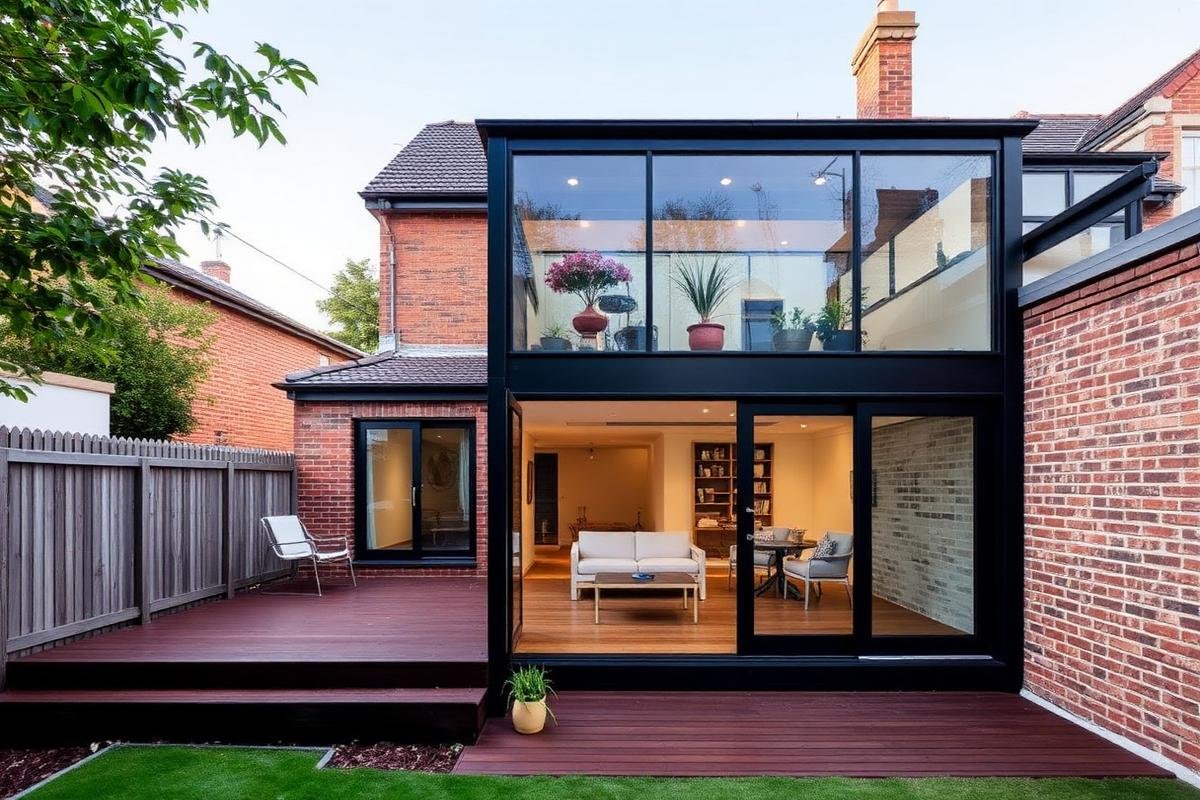
If you’ve started pricing up a home renovation, you’ve probably noticed the answer to “how much will this cost?” depends on who you ask. One mate says they did their whole house for $80,000. Your neighbour spent $300,000 on theirs and it still isn’t finished. A quote from a renovation builder lands somewhere in between and you’re left wondering who’s telling the truth.
Here’s the honest answer: they’re all telling the truth for their renovation. Cost comes down to scope, condition of the existing house, the suburb you’re in, and how far you’re pushing the finishes. There’s no single number that applies to every home in Australia, but there are solid benchmarks, and once you understand what drives the price up or down, you can budget with a lot more confidence.
We’ve put together this guide from years of quoting and building renovations across Australian homes, bathrooms, kitchens, extensions, whole-house renos, and everything in between so you can go into your project with real numbers, not guesswork.
Average Home Renovation Costs in Australia
For homeowners who just want the ballpark figure before reading on, here’s a snapshot of what Australians are typically paying in 2026:
| Renovation Type | Budget Range | Mid-Range | High-End |
|---|---|---|---|
| Bathroom renovation | $15,000–$25,000 | $25,000–$35,000 | $35,000–$60,000+ |
| Kitchen renovation | $15,000–$30,000 | $30,000–$50,000 | $50,000–$90,000+ |
| Full home renovation (cosmetic) | $30,000–$80,000 | $80,000–$150,000 | $150,000+ |
| Full home renovation (structural) | $100,000–$250,000 | $250,000–$400,000 | $400,000+ |
| Single-storey extension | $1,800–$2,500/m² | $2,500–$3,500/m² | $3,500–$4,500+/m² |
| Second-storey extension | $2,500–$3,500/m² | $3,500–$4,500/m² | $4,500–$5,500+/m² |
| Granny flat | $120,000–$180,000 | $180,000–$250,000 | $250,000+ |
These figures are national averages and move around depending on your state, your suburb, and the condition of the home you’re starting with. We’ll break each of these down properly below.
What Actually Drives Renovation Costs Up or Down
Before we get into room-by-room numbers, it helps to understand the handful of factors that swing a renovation budget more than anything else. Once you get these, the “why does my quote look different to my friend’s” question answers itself.
Scope of work
A cosmetic refresh (new paint, new tapware, re-tiling over existing waterproofing) is a different job to a full strip-out that involves moving plumbing, shifting walls, or re-wiring. The deeper the scope, the higher the cost but also the longer the renovation lasts before you’re doing it again.
Structural changes
The moment you start removing load-bearing walls, altering the roofline, or moving a bathroom or kitchen to a new part of the house, you’re adding engineering, permits, and labour that a like-for-like renovation doesn’t need.
Your location
Renovation costs in Sydney and Melbourne generally run higher than Adelaide, Perth, or regional centres, largely due to labour rates and material transport. We’ve broken this out further below.
Access and site conditions
A single-storey home on a wide block with easy trade access is cheaper to renovate than a tight inner-city terrace with no side access, where materials need to be carried through the house or craned in.
Age of the home
Older homes particularly pre-1980s builds often hide surprises once walls come down: asbestos, outdated wiring, or plumbing that doesn’t meet current code. These aren’t always visible in a quote until the demolition stage, which is why a contingency buffer (more on that below) matters so much.
Fixtures and finishes
This is the biggest lever you control. Standard tapware versus a European brand, laminate benchtops versus stone, project-home tiles versus imported porcelain this is where a $30,000 bathroom becomes a $60,000 one.
Bathroom Renovation Costs
Bathrooms are consistently one of the most searched renovation costs in Australia, and for good reason they’re small rooms with a lot packed into them, which makes pricing feel disproportionate to the square metreage.
- Budget bathroom renovation: $15,000–$25,000 keeps the existing layout, standard fittings, no plumbing relocation
- Mid-range bathroom renovation: $25,000–$35,000 better tiles, freestanding bath, some layout changes
- High-end bathroom renovation: $35,000–$60,000+ full layout change, underfloor heating, premium tapware and stone
If you’re renovating on a budget, keeping the existing footprint and plumbing in place is the single biggest way to bring a bathroom renovation cost down without sacrificing quality.
Small bathroom or ensuite: Because so much of a bathroom’s cost is fixed (waterproofing, plumbing, electrical, a shower screen, a vanity) regardless of size, a small ensuite renovation often isn’t dramatically cheaper than a full bathroom expect $12,000–$25,000.
Waterproofing is non-negotiable and shouldn’t be where you cut corners it’s the one part of a bathroom renovation that’s genuinely expensive to fix after the fact, and Australian Standards (AS 3740) set out exactly what’s required.
Kitchen Renovation Costs
Kitchens tend to have the widest cost range of any room, because so much depends on cabinetry and benchtop choice.
- Budget kitchen renovation: $15,000–$30,000 flat-pack or semi-custom cabinetry, laminate benchtops, keeping the existing footprint
- Mid-range kitchen renovation: $30,000–$50,000 custom cabinetry, stone benchtops, a modest layout change or added island
- High-end kitchen renovation: $50,000–$90,000+ fully custom joinery, stone or timber benchtops, integrated appliances, structural changes like removing a wall to open the kitchen to a living area.
A budget kitchen renovation doesn’t have to mean a cheap-looking one reusing the existing cabinet carcasses and upgrading doors, benchtops, and hardware is a popular way to get a mid-range look for a budget-range spend.
If your kitchen renovation involves knocking through to create an open-plan living space, add engineering and structural costs on top of the kitchen fit-out itself this is one of the most common reasons a kitchen quote comes in higher than expected.
Full Home Renovation Costs
A whole-house renovation cost swings the most of any category, because “renovating a house” can mean anything from repainting and re-flooring through to gutting it back to the frame.
- Cosmetic renovation (paint, flooring, kitchen and bathroom refresh, no structural work): $30,000–$150,000 depending on house size
- Mid-level renovation (some structural changes, new services, updated kitchen and bathrooms): $150,000–$300,000
- Full structural renovation (rewiring, replumbing, wall removal, new roof or extension included): $300,000–$500,000+
As a rule of thumb, a full renovation of an established home typically lands somewhere between $1,500 and $3,000 per square metre, though this climbs quickly once structural work, heritage overlays, or a second storey come into play.
House Extension Costs
Extensions are usually priced per square metre because the cost scales fairly predictably with floor area, unlike a renovation where you’re often working around what already exists.
- Single-storey extension: $1,800–$2,500/m² for a standard build, up to $4,500/m² for a high-spec addition with premium finishes
- Second-storey extension: $2,500–$5,500/m² more expensive per square metre than single-storey, since you’re building on top of an existing structure, which usually means underpinning, structural steel, and temporary roof removal
- Rear or side extension for an extra bedroom and bathroom: typically $150,000–$300,000 depending on size and finish level.
Second-storey extensions almost always need a structural engineer to assess the existing footings and frame before council will approve anything, so factor that into your early-stage budget, not just the build cost.
Granny Flats and Secondary Dwellings
With granny flats increasingly used for rental income, ageing parents, or older kids, this is one of the fastest-growing renovation categories in Australia.
- Budget granny flat (1 bedroom, basic finish): $120,000–$180,000
- Mid-range granny flat (1–2 bedroom): $180,000–$250,000
- High-end or fully accessible granny flat: $250,000–$350,000+
Council rules on secondary dwellings vary significantly by state and even by local government area, so it’s worth checking your specific council’s requirements around setbacks, maximum floor area, and whether a Complying Development Certificate (in NSW) or equivalent fast-track approval applies before you budget a build.
Cost Differences by Australian City
Renovation costs aren’t uniform across the country. Labour rates, demand for tradies, and material freight costs all shift the numbers depending on where you live.
- Sydney: Generally the most expensive market in Australia for renovations, driven by high labour demand and tighter site access in established suburbs. Expect costs at the top end of the ranges above.
- Melbourne: Close behind Sydney, particularly for kitchen and bathroom renovations, with strong demand for renovation builders across the inner and middle suburbs.
- Brisbane: Sits in the mid-range nationally, though costs have been climbing with population growth and increased demand for renovations and extensions.
- Perth: Historically more affordable than the eastern states, though material transport costs can push up extension and structural renovation pricing.
- Adelaide: Typically the most affordable of the capital cities for renovation work, with bathroom and kitchen renovations often coming in below the national average.
If you’re comparing quotes, always check whether they’re benchmarked to your city a Melbourne-based cost guide won’t necessarily reflect what you’ll pay in Adelaide or regional Queensland.
Hidden Costs Homeowners Often Miss
A quote from a builder covers the build. It doesn’t always cover everything else that goes into getting a renovation from idea to finished project. These are the costs that catch people out most often:
- Council fees and permits — development applications, building permits, and inspection fees, which vary by council and project scope
- Design and drafting — architect or building designer fees, typically 5–12% of the build cost for a full renovation or extension
- Structural engineering reports — required for any wall removal, second-storey addition, or underpinning work
- Temporary accommodation — if you’re renovating a kitchen or bathroom you can’t live without, or doing a full home renovation, factor in rent or a short-term stay
- Asbestos removal — common in homes built before 1990, and it needs to be professionally removed before demolition can start
- Contingency buffer — the single most important line item in any renovation budget
Why You Need a Contingency Buffer (And How Much)
Every experienced renovator will tell you the same thing: build a contingency into your budget from day one, not as an afterthought. The industry standard is 10–20% of your total renovation budget, and for older homes or anything involving structural work, we’d lean towards the higher end.
This isn’t pessimism it’s realism. Once walls come down, you sometimes find things the original quote couldn’t account for: outdated wiring that doesn’t meet current standards, water damage behind tiles, or termite damage in timber framing. A contingency buffer means these discoveries become manageable adjustments instead of budget-breaking emergencies.
How to Get an Accurate Renovation Quote
The best way to get a number you can actually trust is to get a fixed-price quote from a licensed builder who has seen your home in person, not a phone estimate based on a rough description. A proper quote should be itemised labour, materials, permits, and any provisional sums clearly broken out so you know exactly what you’re paying for and where the risk of blowouts sits.
It’s also worth getting two or three quotes for anything beyond a small cosmetic job. Not to chase the cheapest number, but because comparing itemised quotes side by side is one of the best ways to spot what’s actually included and what’s been left out.
Get a Real Number for Your Renovation
Cost guides are a great starting point, but they can only take you so far the only way to know what your renovation will actually cost is to have a builder walk through your home, understand what you’re working with, and put together a proper itemised quote.
If you’re ready to move past the guesswork, get in touch for an obligation-free consultation and we’ll give you a clear, honest picture of what your renovation will cost no surprises, no vague “starting from” figures.
FAQ
How much does it cost to renovate a house in Australia?
A full home renovation in Australia typically costs between $30,000 for a cosmetic refresh and $500,000+ for a full structural renovation, with most established homes landing somewhere between $150,000 and $300,000 for a mid-level renovation covering kitchen, bathrooms, and some structural work.
What is the average cost per square metre to renovate a house?
Most Australian home renovations cost between $1,500 and $3,000 per square metre, though this rises significantly for structural work, second-storey additions, or heritage-listed homes.
Is it cheaper to renovate or extend?
Renovating within your existing footprint is generally cheaper per square metre than extending, since you’re not adding new foundations, roofing, or external walls. That said, an extension adds usable floor space a renovation can’t, so the better option depends on whether your issue is layout or size.
What renovation adds the most value to a house in Australia?
Kitchen and bathroom renovations consistently offer the strongest return, along with adding a bedroom or bathroom where a home is under-capacity for its land size particularly in family-suburb markets across Sydney, Melbourne, and Brisbane.
How long does a home renovation take?
A bathroom renovation typically takes 3–6 weeks, a kitchen renovation 4–8 weeks, and a full home renovation or extension anywhere from 4 to 12 months depending on scope, council approval timeframes, and weather delays.
How much does a granny flat cost to build?
A granny flat in Australia typically costs between $120,000 and $250,000+, depending on size, finish level, and whether it’s a basic one-bedroom design or a fully accessible two-bedroom secondary dwelling. On top of the build cost, a granny flat can add meaningful value to your property, particularly if it’s set up as a self-contained rental.
How much does it cost to add a second storey?
Adding a second storey typically costs $2,500–$5,500 per square metre more than a single-storey extension, because the existing footings and ground-floor frame usually need to be assessed and reinforced by a structural engineer before any building work starts, and the roof needs to come off before the new level goes up.
How do I renovate on a budget without cutting corners?
Set a realistic renovation budget from the start, keep your existing plumbing and electrical layout where you can (moving these is one of the biggest cost drivers), spend on the things you touch every day like tapware and benchtops, and save on things that are easy to upgrade later, like paint colour or light fittings. A good builder can usually show you where a budget bathroom renovation or budget kitchen renovation can flex without compromising the parts that matter waterproofing, structural work, and compliance.
Do I need council approval to renovate my house?
It depends on the scope. Cosmetic work new kitchen cabinetry, re-tiling a bathroom, repainting generally doesn’t need council approval. Anything structural, including wall removal, extensions, second storeys, or a new granny flat, will usually need either a building permit, a Complying Development Certificate (NSW), or full development approval, depending on your state and council. Always check with your builder or a certifier before work starts, since building without the right approval can cause real problems if you go to sell.
What order should I renovate a house in?
For a full home renovation, the general order is: structural work first (wall removal, extensions, roofline changes), then plumbing and electrical rough-in, followed by plastering, flooring, kitchen and bathroom fit-out, and painting last. Getting this sequence right avoids paying to redo finished work like painting a wall that then needs to be opened up for an electrician.