
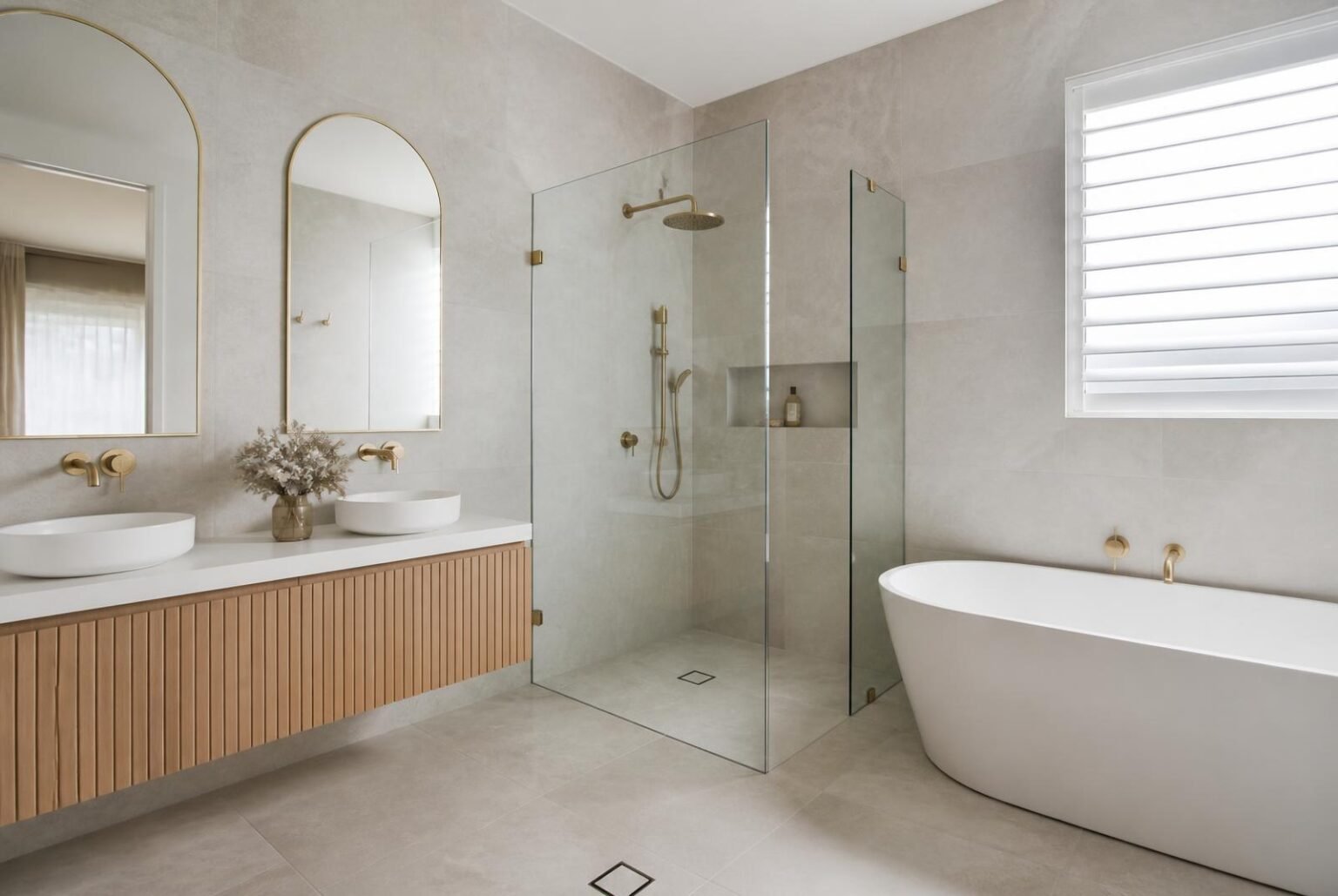
Waterproofing is the part of a bathroom you never see and the part that decides whether it lasts twenty years or two. Here is what the standard requires and what to ask for.
Why bathrooms fail
Most bathroom problems we are called to look at are not tiling problems. They are waterproofing problems that show up as loose tiles, dark grout, swollen skirting in the next room or a musty smell that never clears.
Older Melbourne bathrooms — anything built before the 1990s — frequently have no compliant membrane at all. Tiles were laid on a screed and the room relied on the tiles themselves to hold water out. Tiles are not waterproof; the membrane behind them is.
What AS 3740 covers
AS 3740 is the Australian Standard for waterproofing domestic wet areas. In practical terms it sets out where the membrane must go, how junctions are treated, and how the room has to be prepared before the membrane is applied.
- The shower area needs waterproofing to the floor, the wall junctions and up the walls to the required height.
- The entire floor of the wet area is treated where the substrate or construction type requires it.
- Wall and floor junctions, corners and penetrations for taps and wastes are reinforced with bond breakers and angle fillets.
- Substrates must be sound, dry and prepared before application, and each coat needs its specified cure time.
- Falls must direct water to the waste rather than pooling against the screen or the wall.
The parts people try to rush
Membranes need time. Skipping cure time between coats so the tiler can start on Monday is the single most common cause of premature failure, and it is invisible once the tiles go on.
The other shortcut is tiling over an existing failed bathroom. It hides the symptom, adds height at the door, and traps the moisture that was already there. In almost every case a full strip-out to frame costs less over ten years.
What you should receive at handover
On a compliant Victorian bathroom renovation you should get documentation, not just a finished room. Ask for it before work starts so there is no argument at the end.
- Waterproofing details showing the product used and where it was applied.
- Compliance certificates for the licensed plumbing and electrical work.
- Warranty information for the membrane and the workmanship.
- Photographs of the membrane and the rough-in before tiling covered them.