
Bathroom Renovations Melbourne
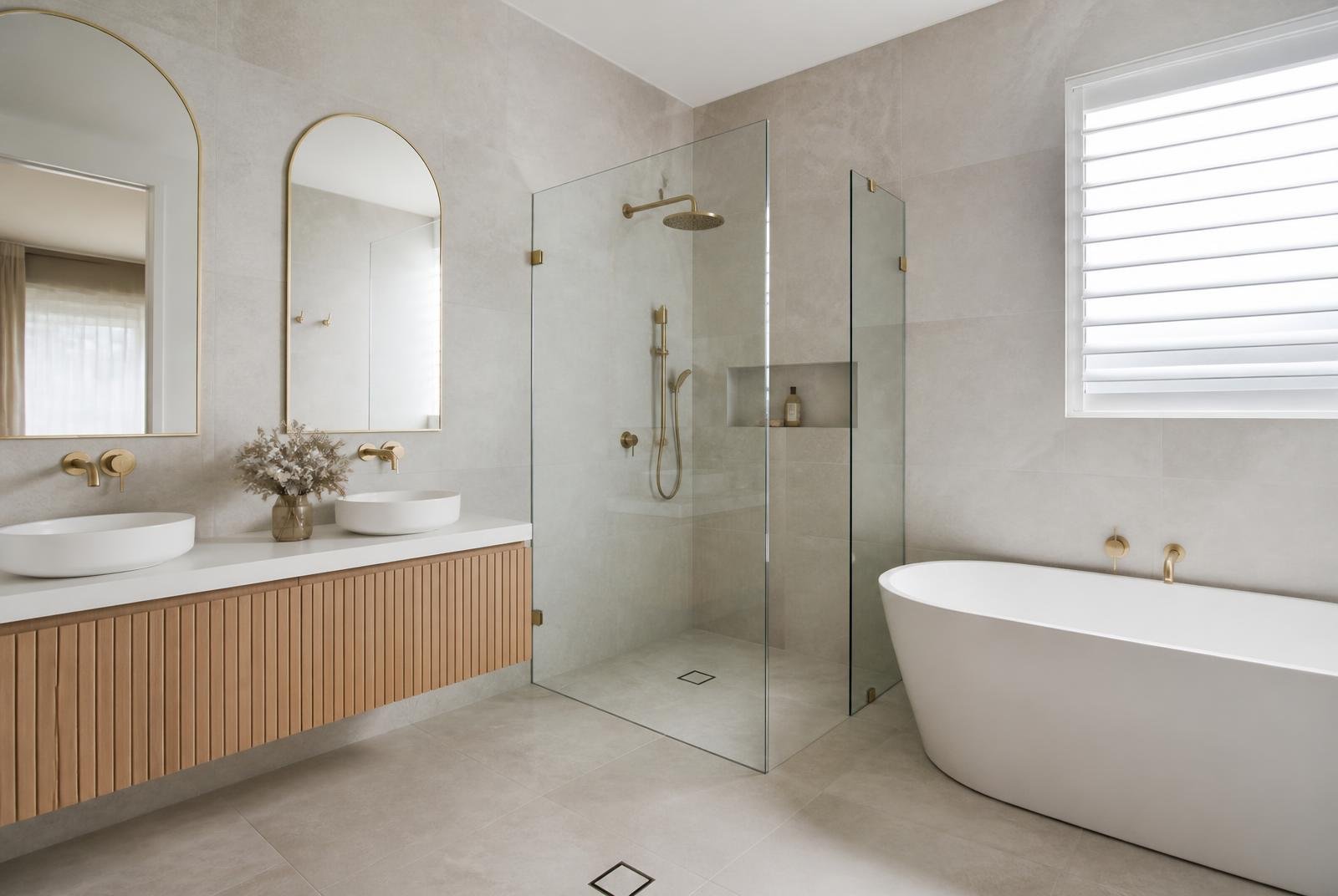
Most bathroom problems are waterproofing problems
A bathroom is the most technically demanding small room in a house. It’s the only one where the finishes are holding back water for twenty years, and where getting it wrong doesn’t show up for two years by which time the damage is in the floor joists.
Almost every failed bathroom we’re called to look at failed for the same handful of reasons. Waterproofing taken up the wall a token 50mm instead of the full shower height. Falls that don’t actually fall to the waste. Membrane applied over a substrate that was never rated for it. A shower niche cut in after the waterproofing went down.
Bathroom renovations done properly cost more than the cheapest quote because the parts you can’t see are done to the standard. We waterproof to AS 3740, on the correct substrate, with the membrane inspected before a single tile goes on.
Get a free consultation
We use your details only to respond to this enquiry. Read our
Privacy Policy.
Types of bathroom renovation we do
Full bathroom renovations
Strip the room to the joists or the slab, reconfigure the layout if it needs it, replace the services, waterproof, tile and fit off. This is the right call when the layout is wrong, when there’s any sign of water damage, or when the bathroom is original to a pre-1990s house.
Small bathroom renovations
Small bathroom renovations in Melbourne are their own discipline. In a terrace ensuite or a unit bathroom you’re working in three or four square metres where every millimetre is spoken for and the tricks that make a small bathroom work are mostly decisions made before the tiler arrives.
Wall-hung vanities and toilets to keep the floor visible. A frameless screen instead of a framed one. Large-format tiles to cut grout lines. A recessed niche instead of a caddy. Getting the falls right in a small floor area is harder, not easier, because you’ve got less run to work with.
Ensuites
Often part of a house extension or a side addition, where we’re adding a bedroom and ensuite rather than replacing an existing room. New ensuites need a soil connection, ventilation and structural consideration for the floor build-up, so they’re worth planning early rather than adding to a design late.
Bathroom and laundry combinations
Common in Melbourne terraces and workers’ cottages, where the original bathroom and laundry are both tacked onto the back in a lean-to. Combining them properly or separating them properly — often frees up more space than either room had on its own.
Bathroom renovation costs in Melbourne
A bathroom renovation in Melbourne typically costs 18,000–28,000 for a small bathroom, 25,000–40,000 for a standard full renovation, and 40,000–70,000 or more for a large or high-specification bathroom. Moving the toilet or relocating plumbing is the single biggest cost variable.
| Scope | Indicative range | What it covers |
|---|---|---|
| Small bathroom or ensuite | $18,000 – $28,000 | 3–5m², existing layout, standard fittings |
| Standard full renovation | $25,000 – $40,000 | Full strip-out, some services moved, quality fittings |
| Large or high-specification | $40,000 – $70,000+ | Layout change, stone, underfloor heating, premium tapware |
| Bathroom and laundry combined | $35,000 – $60,000 | Both rooms, reconfigured |
What drives bathroom renovation costs
Moving the toilet
Tile size, format and layout
Labour, not material, is where tiling costs sit. Large-format tiles look better in a small bathroom but need a flatter substrate and are slower to handle. Herringbone, mosaics and any pattern with a set-out add hours. Full-height tiling costs more than a half-height with a painted wall above.
What's behind the walls
In pre-1990s Melbourne homes we routinely find no waterproofing at all, plasterboard where villaboard or fibre cement should be, galvanised pipework at end of life, and floor joists that have taken water for years. On older weatherboards on stumps, floor levels have often moved enough to affect the falls.
None of it is unusual. It just needs finding before the quote is fixed rather than after.
Fittings and tapware
The gap between a good mid-range tapware suite and a premium imported one is often $3,000 to $6,000 in the same bathroom. Freestanding baths, frameless screens, underfloor heating and heated towel rails are each a line item worth deciding on early.
Every quote we write is itemised down to the tapware. Variations are documented and approved in writing before work starts. The number you sign is the number you pay.
How your bathroom renovation comes together
Stage 1 : Design and selections
Layout, fixture positions and fitting selections. We lock selections in before demolition, because a tapware change after the rough-in is a wall opened up again.
Stage 2 : Strip-out
Back to the studs and the joists or slab. This is where we find out what the previous renovation actually did, and it’s why we build a contingency conversation into the quote rather than pretending old houses are predictable.
Stage 3 : Rough-in and substrate
Plumbing and electrical
Licensed plumbers and electricians, roughed in to the new layout and inspected before anything is closed up.
Substrate and falls
Wet-area-rated sheeting, and screed laid to fall towards the waste. Falls are set here. No amount of good tiling fixes a floor that doesn’t drain.
Waterproofing to AS 3740
Membrane applied to the shower floor and walls, the full bathroom floor, and up the walls to the heights the standard requires. Waterproofing is a critical stage in Victoria — it gets inspected, photographed and documented before tiling starts. If a builder can’t show you waterproofing photos, that’s a question worth asking.
Stage 4 : Tiling and fit-off
Tiling, grouting, silicone, then vanity, toilet, screen, tapware, towel rails and lighting.
Stage 5 : Handover
Warranty documentation, waterproofing certificate, and a walk-through where we go over the room and write down anything you’re not happy with.
How long does a bathroom renovation take?
On-site works run three to five weeks for a standard bathroom. Add design and selections at the front two to three weeks and tile and fitting lead times, which can be longer than the build itself if something is on back-order.
The stage that surprises people is waterproofing. The membrane needs proper curing time between coats and before tiling, and rushing it is the single most common cause of failure. Anyone promising a finished bathroom in ten days is cutting that corner.
Plan on four to eight weeks door to door, and one bathroom out of action for three to five of them.
Where we renovate bathrooms in Melbourne
We work across metropolitan Melbourne, and the housing stock changes what a bathroom renovation involves.
01
02
03
04
Why Melbourne homeowners choose HRE Built
for bathroom renovations
Waterproofing done to the standard
Fixed price, no surprise variations
One team, concept to handover
Weekly progress you can see
Warranty and insurance in writing
Other services
Custom Home Building
House Extensions
Kitchen Renovations
Bathroom renovation FAQs
How much do bathroom renovations cost in Melbourne?
How much does a small bathroom renovation cost?
How long does a bathroom renovation take?
Do I need a permit for a bathroom renovation?
Usually not for a like-for-like renovation within the existing footprint. A building permit is required if you’re altering structure, moving walls, or extending the room. Plumbing, electrical and waterproofing must be carried out by licensed tradespeople and certified regardless, and domestic building insurance is required on domestic building work over $16,000.
What is AS 3740 and why does it matter?
AS 3740 is the Australian Standard for waterproofing wet areas in residential buildings. It sets where the membrane goes, how high up the walls, and what substrates it can be applied to. Nearly every bathroom failure traces back to it being ignored — and because the damage takes years to appear, you often can’t tell until the floor is soft.
Can we live in the house during the renovation?
Is it cheaper to keep the existing layout?
Substantially. Keeping the toilet, shower and vanity roughly where they are avoids relocating drainage and can save several thousand dollars. That said, if the layout is the reason the room doesn’t work, moving it is usually the right call — a cheap renovation of a bad layout is money spent to be annoyed for another fifteen years.
What's the best tile size for a small bathroom?
Should I get underfloor heating?
Do you renovate bathrooms and kitchens together?
Often, and there are real savings in doing so — shared trades, one mobilisation, one disruption period rather than two. If both rooms are due, ask us to quote them together and see our kitchen renovations page for details.