
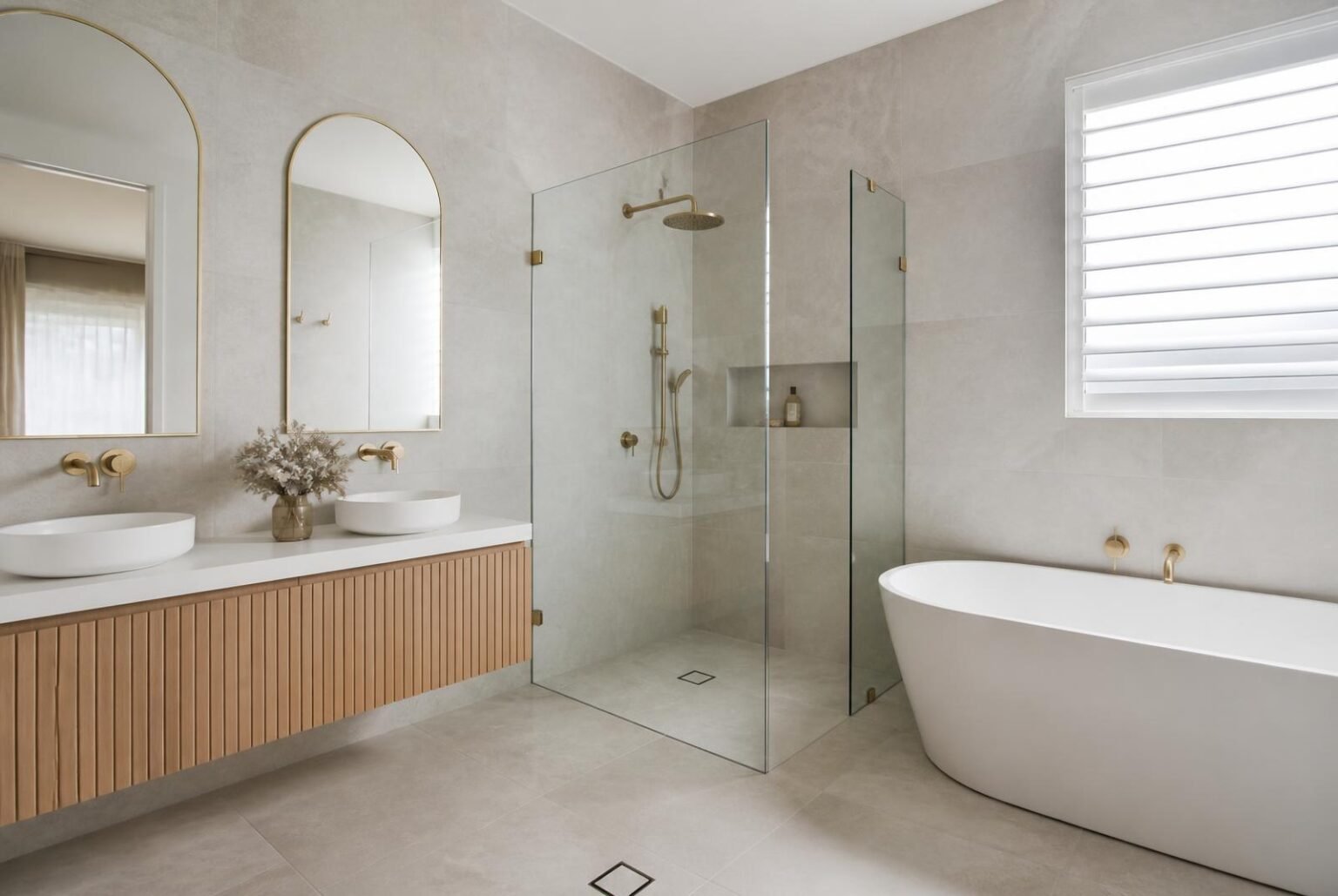
A bathroom renovation in Melbourne typically costs 18,000–28,000 for a small bathroom, 25,000–40,000 for a standard full renovation, and 40,000–70,000 or more for a large or high-specification bathroom. Moving the toilet is the single biggest cost variable, because it needs a soil connection with adequate fall.
Let’s deal with the question most cost articles avoid.
A great many people start this search hoping for a $10,000 bathroom. That’s one of the most common searches in this category, along with $5,000. And the honest answer is that in Melbourne in 2026, a full bathroom renovation done properly by licensed trades does not happen at those numbers.
Not because builders are gouging. Because a bathroom is the most technically demanding small room in a house, and the trades, materials and compliance involved have a floor price. You’ll see why below — and there are genuinely good things you can do with $10,000, just not a full renovation.
Bathroom renovation costs at a glance
Every kitchen that doesn’t work has a layout problem dressed up as a finishes problem. New doors on a bad plan is money spent to be annoyed in nicer surroundings.
| Scope | Indicative range | What it covers |
|---|---|---|
| Cosmetic refresh | $5,000 – $12,000 | Paint, tapware, vanity, mirror, towel rails, lighting. No tiling, no waterproofing |
| Small bathroom renovation | $18,000 – $28,000 | 3–5m², full strip-out, existing layout, standard fittings |
| Standard full renovation | $25,000 – $40,000 | Full strip-out, some services moved, quality fittings |
| Large or high-specification | $40,000 – $70,000+ | Layout change, stone, underfloor heating, premium tapware |
| Ensuite | $18,000 – $30,000 | Usually smaller, but new ensuites need a new soil connection |
| Bathroom and laundry combined | $35,000 – $60,000 | Both rooms, reconfigured |
Is $10,000 enough to renovate a bathroom?
For a full renovation in Melbourne, no — and anyone quoting you that number is either leaving something out or cutting something you can’t see.
Here’s roughly where $25,000 goes on a standard bathroom, which explains why:
Strip-out and disposal. Removing the old bathroom, including the tiles and screed, and getting it off site.
Plumbing and electrical rough-in. Licensed trades, two or three site visits each, certificates of compliance.
Substrate and screed. Wet-area-rated sheeting and a floor laid to fall properly toward the waste.
Waterproofing to AS 3740. Membrane, proper curing time between coats, inspection and documentation.
Tiling. Usually the largest single trade cost. Labour, not material, is where it sits — a small bathroom is slower per square metre, not faster, because it’s all cuts and corners.
Fittings and fixtures. Vanity, toilet, shower screen, tapware, mirror, towel rails, exhaust fan.
Painting, silicone, final fit-off and clean.
Take $15,000 out of that and something has to give. In practice it’s usually the waterproofing, the substrate, or the licensing — and those are the three things that cost you most when they fail.
What you can genuinely do with $10,000
Plenty, if the bones are sound. A cosmetic refresh — new tapware, vanity, mirror, lighting, towel rails, paint, resealing and regrouting — can transform how a bathroom looks for $5,000 to $12,000, provided you’re not touching tiles, waterproofing or services.
It’s not a renovation. It’s a facelift. But if the layout works, the tiles are intact and there’s no sign of water damage, it’s often the smartest money in the house.
What’s the most expensive part of a bathroom renovation?
Three things compete, and which one wins depends on your bathroom.
Tiling is usually the single largest trade cost. It’s labour-driven, and the variables are tile size, format, layout and how many cuts the room demands. Herringbone, mosaics and anything with a set-out add hours. Full-height tiling costs more than half-height with paint above.
Relocating plumbing is the biggest avoidable cost. Keeping the toilet, shower and vanity roughly where they are can save several thousand dollars. Moving the toilet is the dearest of the three, because it needs a soil connection with adequate fall — on a concrete slab that means cutting concrete, and on timber floors it means working beneath them.
What’s behind the walls is the one nobody can price in advance. In pre-1990s Melbourne homes we routinely find no waterproofing at all, plasterboard where villaboard or fibre cement should be, galvanised pipework at end of life, and floor joists that have taken water for years. On older weatherboards on stumps, floor levels have often moved enough to affect the falls.
None of that is unusual. It just needs finding before the price is fixed rather than after.
How much does a small bathroom renovation cost?
A small bathroom renovation in Melbourne generally costs $18,000 to $28,000 for a full replacement.
The thing that surprises people is that small bathrooms aren’t proportionally cheaper. A 3 square metre bathroom might cost 70% of what a 6 square metre one does, not 50%.
Why: every trade still attends and still has a minimum. The toilet, vanity, screen and tapware cost the same. Tiling is slower per square metre in a small room because it’s mostly cuts. And getting falls right in a small floor area is harder, because there’s less run to work with.
What does come down is tile quantity, and sometimes the screen.
The upside is that a small bathroom is the one where good design pays the biggest dividend. Wall-hung vanity and toilet to keep floor visible, a frameless screen, large-format tiles to cut grout lines, a recessed niche instead of a caddy. Small bathroom renovations done well change how a terrace or a unit lives.
How much does a luxury bathroom renovation cost?
$40,000 to $70,000 and upwards, and at the top end there’s no real ceiling.
What takes a bathroom into that range:
Layout change — moving walls, relocating the toilet, combining with a laundry or borrowing space from an adjoining room. Structural work means a building permit.
Stone on the vanity, the floor, or full-height in the shower. Natural stone, porcelain or sintered surfaces, since engineered stone was prohibited nationally from 1 July 2024 over the silicosis risk to stonemasons. ⚠️ Verify current status with your supplier.
Underfloor heating. One of the few upgrades nobody regrets in a Melbourne winter, and far cheaper installed during a renovation than retrofitted. Decide before the screed goes down.
A freestanding bath, which needs floor loading considered and usually a floor-mounted mixer.
Premium tapware and fittings. The gap between good mid-range and imported premium is often $3,000 to $6,000 in the same bathroom.
Frameless glazing, custom joinery, feature lighting and a proper niche with its own light.
How can I reduce bathroom renovation costs?
Honest ways, and a few false economies.
What genuinely saves money
Keep the layout. The single biggest saving available. Toilet, shower and vanity in their existing positions avoids relocating drainage entirely.
Half-height tiling with paint above. Looks deliberate, costs less, and in a well-ventilated bathroom there’s no performance reason to tile to the ceiling everywhere.
Large-format tiles in a simple layout. Fewer cuts, fewer grout lines, faster to lay.
A framed or semi-frameless screen instead of fully frameless. The price difference is real.
Mid-range tapware from a reputable brand with available spare parts. The performance gap to premium is much smaller than the price gap.
Keep the bath if nobody uses it — or lose it deliberately. Removing a bath you never use frees space and money. Just think about resale if it’s the only bath in the house.
False economies
Cutting the waterproofing. The cheapest thing to skimp on and by far the most expensive to fix. Failure takes two years to show and by then the damage is in the floor structure.
Unlicensed trades. Plumbing, electrical and waterproofing must be done by licensed tradespeople and certified. It’s also what your insurer will ask about.
Tiling over existing tiles. Sometimes acceptable, often a way of burying a problem and raising the floor level enough to create a threshold.
The cheapest quote. If one quote is $12,000 under the others, the saving is somewhere. Ask where.
What’s not in the quote
Build cost isn’t project cost. Set aside for:
- Tile and tapware selections above the allowance, if the quote uses prime cost items
- Appliance-grade extras — heated towel rails, underfloor heating, demister mirrors
- Flooring beyond the bathroom, if it continues into the hallway
- Painting beyond the bathroom, because new work makes adjoining old paint look old
- A building permit, if structure is altered
- Contingency — 10% on any bathroom in a house built before 1990
Getting a real number for your bathroom
Every figure here is a range. The number that matters is the one for your bathroom, your layout and your house — and in a house built before 1990, nobody knows exactly what’s there until it’s opened up.
At HRE Built we assess what we can see, quote itemised down to the tapware, and document a contingency conversation rather than pretending old houses are predictable. We waterproof to AS 3740 on the correct substrate, photographed and documented before tiling starts.
See our bathroom renovation services Where we build across Melbourne Request a free consultation or call 0498 953 000
How long does a bathroom renovation take?
On-site works run three to five weeks for a standard bathroom. Add two to three weeks at the front for design and selections, and tile and tapware lead times, which can exceed the build if something is on back-order.
The stage that catches people out is waterproofing. The membrane needs proper curing time between coats and before tiling, and rushing it is the most common cause of failure. Anyone promising a finished bathroom in ten days is cutting that corner.
Plan on four to eight weeks door to door, and one bathroom out of action for three to five of them.
How to compare bathroom quotes
Is it itemised? You want vanity, toilet, screen, tapware, tiles, waterproofing and trades listed separately.
How much sits in prime cost and provisional sums? A quote stuffed with allowances isn’t a fixed price.
Does it name the waterproofing standard? AS 3740 should be in there, along with who does it and whether it’s documented.
Are the trades licensed, and will you get certificates? Not optional in Victoria.
What happens if they find rot or no existing waterproofing? The honest answer is “we’ll document it, price it and get your approval before proceeding,” not silence.
Every quote we write is itemised down to the tapware. Variations are documented and approved in writing before work starts. The number you sign is the number you pay.
Frequently asked questions
How much does it cost to renovate a bathroom in Melbourne?
Typically $18,000 to $28,000 for a small bathroom, $25,000 to $40,000 for a standard full renovation, and $40,000 to $70,000 or more for large or high-specification work. The biggest variables are whether you move the plumbing, how much tiling is involved, and what’s found behind the walls.
How much should I budget for a bathroom renovation?
For a standard family bathroom in Melbourne, budget $30,000 to $35,000 as a realistic working figure, including a 10% contingency. If you’re keeping the layout and choosing mid-range fittings you may come in under; if you’re moving the toilet or the house predates 1990, the contingency is there for good reason.
How much does a small bathroom renovation cost?
$18,000 to $28,000 for a full replacement. Small bathrooms aren’t proportionally cheaper — the same trades attend with the same minimums, the fittings cost the same, and tiling is slower per square metre because it’s mostly cuts.
What is the most expensive part of a bathroom renovation?
Tiling is usually the largest single trade cost, because it’s labour-driven. The biggest avoidable cost is relocating plumbing, particularly the toilet, which needs a soil connection with adequate fall. The least predictable is whatever is behind the walls.
How can I reduce bathroom renovation costs?
Keep the layout, tile half-height with paint above, use large-format tiles in a simple pattern, choose a semi-frameless screen, and select good mid-range tapware. What not to cut is waterproofing, substrate or licensed trades — those are the ones that cost multiples to put right.
Is $20,000 enough to renovate a bathroom?
For a small bathroom with the existing layout and mid-range fittings, yes, $20,000 is workable in Melbourne. For a standard family bathroom with any layout change, it’s tight. For $10,000 or less you’re looking at a cosmetic refresh — new tapware, vanity, paint and resealing — rather than a renovation.
How much does a luxury bathroom renovation cost?
$40,000 to $70,000 and up. Layout changes, stone surfaces, underfloor heating, a freestanding bath, frameless glazing and premium tapware each add several thousand. At the upper end there’s no practical ceiling.
Does a bathroom renovation add value?
Generally yes in established Melbourne suburbs, and a dated or failing bathroom holds a sale price back more than a good one lifts it. If you’re selling within twelve months, a well-executed cosmetic refresh often returns better than a full renovation. Talk to a local agent about your street before budgeting on resale.
Do I need a permit for a bathroom renovation?
Usually not for a like-for-like renovation in the existing footprint. A building permit is required if you’re altering structure, moving walls, or extending the room. Plumbing, electrical and waterproofing must be carried out by licensed tradespeople and certified regardless.